A Lost Generation
We’re all addicted to our phones and it’s ruining our lives.
1852 words, 7 minute read On the 25th of March, a 20-year old known as Kaley, won $6 million against Meta and YouTube due to the harm their ‘intentionally’ addictive social media platforms did to her mental health (Hays 2026). In the wake of this historic verdict, I think it's time we re-evaluate our own abusive relationships with social media, and collectively recognise the harm it has done to an entire generation.
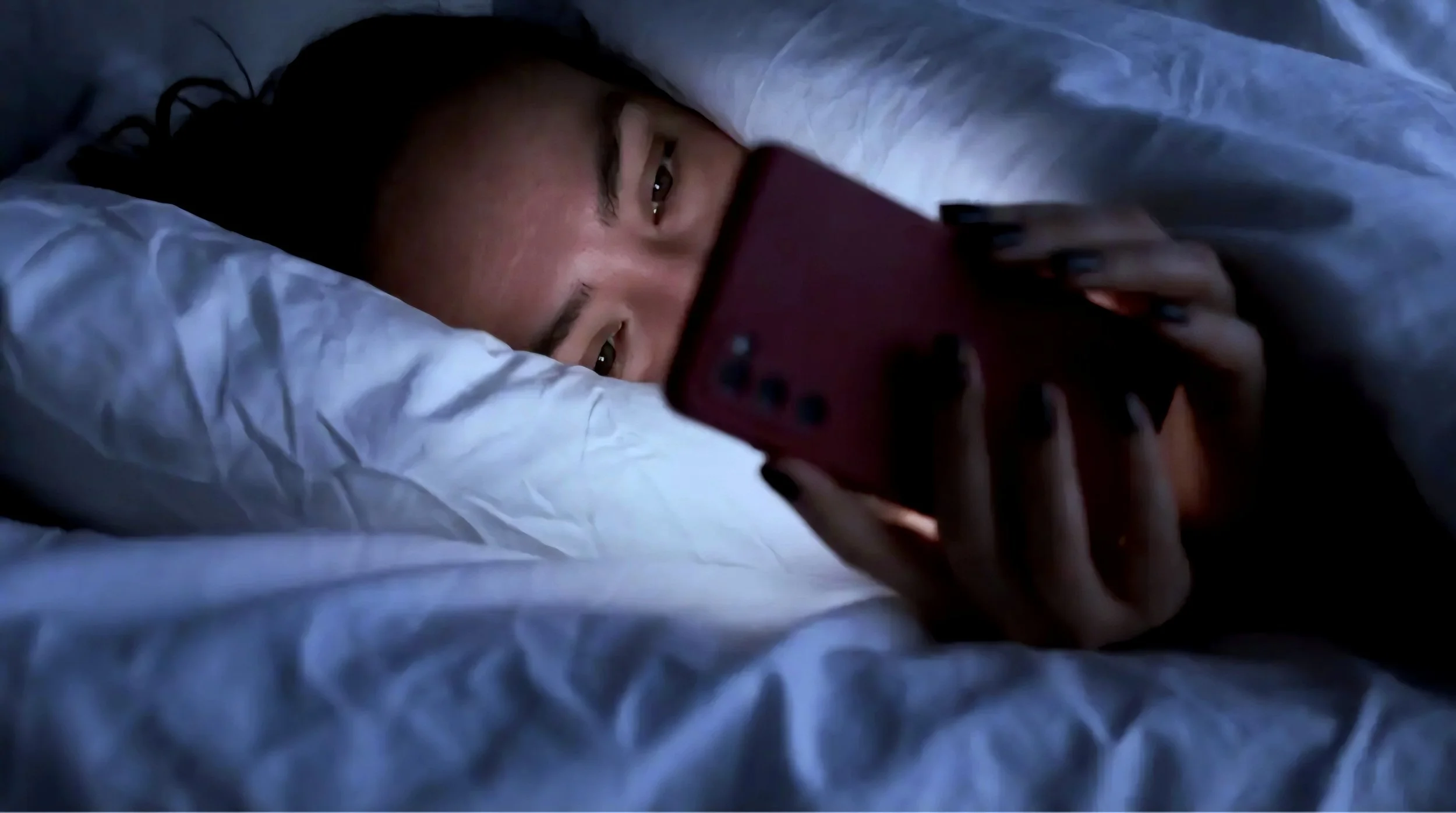
I am addicted to my phone, and it’s ruining my life. There is palpable shame around admitting to a social media addiction beyond the security of a self-deprecating one-liner. But the unadulterated truth is, my screen time makes me nauseous, and when according to Ofcom, the average 18 to 24-year old ‘spends six hours and 20 minutes of their personal time on screens’, I’m sure I’m not alone (Maskell 2026).
Three days ago, I redownloaded TikTok for the first time in 5 months, and my evening quickly vanished into the ether. It was almost as though my synapses had been hijacked; I wasn’t even enjoying myself, my eyes were tired and raw, yet hopelessly anchored to the screen. I only had the app on my phone for around 24 hours before I snapped at around 3 pm, having completely wasted my day off, and compulsively threw my device across my bed in a last-ditch attempt to physically break the trance. I subsequently deleted it. In the moments after, as I readjusted to the absence of blue light, a wave of guilt consumed me. After all, how could I be so undisciplined that I allowed myself to do this…AGAIN? How could my mind be so weak? God I’m so stup… then my phone buzzed; the group chat was kicking off, I had to pitch in. I don’t even remember going to Instagram afterwards, or actively clicking on it, but by muscle memory, my thumb automatically started scrolling through reels; Self scolding silenced, mind placated.
The unfiltered reality is, even after scouring TikTok from my devices, my life revolves around screens. 8 am, my alarm goes off, and I scroll to wake up my eyes, brush my teeth to a podcast, Instagram reels on the train, YouTube during lunch, a nose through Substack, a random 2010’s movie clip next to a video of someone cutting up kinetic sand, Netflix before bed. A flood of digital dopamine from sunrise to set, but it's all ok because I turn on the blue light filter when I’m working on my laptop during the day.
The terms ‘chronically online’ and ‘brain rot’ have been thrown around so much they have lost all meaning. A rap across the knuckles, akin to a digital wellness warning that you casually dismiss, or a friend's baffled reaction when you say ‘low-key’ with full sincerity. But when taken at face value, our brains rotting is a grotesque and alarming notion I can no longer dismiss. Due to the ‘inescapable’ nature of screens, the rate of children reading for fun dropped to the ‘lowest recorded level in the UK’, impacting a generation’s ‘cognitive, linguistic and social-emotional growth’ (Creamer 2025). Likewise, according to a survey undertaken by King’s College London, 49% of the public believe their ability to concentrate has worsened in recent memory, and 47% believe they can no longer think deeply (King's College London 2022).
When commenting on Kaley's win, Sir Keir Starmer condemned the status quo as ‘not good enough’ (Hays 2026), pledging to ban ‘addictive algorithms’ to better protect children from social media platforms (Sylvester 2026). I agree, of course, that children need to be kept off social media, but I would argue that tackling social media addiction through this lens alone will reap unsatisfactory results. In her Observer article on Britain's ‘school readiness crisis’, Rachel Sylvester touches on the link between parental screen time and delayed child development (Sylvester 2026). Similarly, as explored in a recent Guardian article, Gen Z parents are more likely to ‘struggle to read with their children’, as they don’t enjoy reading themselves due to their own preference for short-form video content (Demopoulos 2025) . Having spent the majority of my working life in the service industry, a shocking amount of families spend their meals with their heads bowed to phones, toddlers plugged into iPads.
As humans, we adapt to and learn from the environment around us, particularly as children, so when the average UK adult checks their phone 80 times a day, I find it unsurprising that children are becoming addicted to the same devices (King's College London 2022). A social media addicted population, raising the next generation to be equally as dependent; we really are Silicon Valley's most easily exploitable cash cow.
So what now? Meta and YouTube were negligent in disclosing the addictive nature of their algorithms, our ability to think deeply has been damaged, and the kids are not ok. But let me kill the time before the bus gets here with a quick scroll. Like an alcoholic trying to stay sober with a fully stocked liquor cabinet, having a smartphone has become woven into the social contract. From unavoidable roadblocks like work group chats, phone calls, urgent emails, and Google Maps. To smaller things like, producing your digital railcard on the train, getting an uber home from a night out, or downloading the allergy information from the QR code at a restaurant. Likewise, social media remains another unavoidable Goliath. Having an online presence as a digital portfolio is a necessity for anyone working within a creative field, with many job opportunities and networking events exclusively promoted on Instagram. Particularly for those in marketing or sales, keeping up to date with online trends requires a hefty screen time. Even more significantly, the way teenagers and young adults socialise has been completely re-evaluated by the digital world. From keeping in contact with friends, to the prevalence of online dating, without a collective structural overhaul, severing that digital umbilical cord can equate to cutting yourself off from old and new connections.
That is to say, it’s not all doom and gloom. In December 2025, Australia banned social media for under-16’s (Livingstone 2025). Although the effect of the ban is dubious, it demonstrates a growing awareness around the harmful effects of excess screentime and social media use. In January, Kathryn Jezer-Morton’s The Cut article, ‘In 2026, We Are Friction-Maxxing’, went viral. Kathryn argued that we should be deliberately avoiding technologies to intentionally inconvenience ourselves, in a last ditch effort to build resilience and increase satisfaction (Jezer-Morton 2026). Triggering a wave of young people to consider their internet use and push back against digital overload. Indicative of the larger going analogue trend we have seen since late 2025. In my personal life, I am noticing that a larger percentage of my circle is actively trying to take a step back from social media and shift their scrolling habits.
But how successful is willpower and education alone? Tristan Harris puts this notion succinctly, reminding us that ‘‘there are a thousand people on the other side of the screen’ whose job it is to break down the self-regulation you have (Burkeman 2021). Harrison's sentiments are perfectly demonstrated by the popularity of the phone blocker company ‘BRICK’, which sells an external device -a brick like cube- that locks certain apps on your phone for a set period of time when tapped. Unable to find the willpower to go cold turkey independently, people are willing to spend the £54 (plus shipping) to be released from social media for a few hours (“Do more of what matters - Brick LLC”). In testimony during the Meta addiction lawsuit, a former Meta engineering director admitted to knowing that the ‘infinite scroll’ feature intentionally exploits ‘the brain’s reward system’ (Hoang 2026). So is it really surprising when we see the feigned resistance of a ‘what's in my analogue bag’ TikTok video, showing a digital camera but filmed and uploaded to social media using an iPhone; fresh comments readily hearted by the creator. After all, nothing I have said here is new information, but like a smoker who drags deeply even though they know it is killing them, a lifetime spent hooked up to the digital drip makes it nearly impossible to disengage.
Having implemented the majority of my digital wellness settings, I’m unsure what else I can do. Technology cannot be culled from our lives, and nor should it, as despite its addictive drawbacks, being connected and informed is a privilege. A blanket ban is not the answer, but I'm unsure how to find the correct balance. I have become haunted by the image of my body curled in the fetal position, face framed in blue light; expression placated by a stream of content, eyes engaged, brain sluggish. I feel justifiable anger when I think about how many hours, days, months of my life I have lost scrolling on that hot bundle of carbon. As explained by Co-Director of the Centre for Attention Studies at King’s College London, Professor Edmund Sonuga-Barke, “Technology has created more distractions and reduced the need, and perhaps willingness, of people to engage in long and tedious tasks to achieve their goals’ (King's College London 2022). Leaving the titular question, what would Generation Z have become if we had utilised those thousands of hours elsewhere?
References
Burkeman, Oliver. 2021. “At best, we’re on Earth for around 4,000 weeks – so why do we lose so much time to online distraction?” The Guardian. https://www.theguardian.com/books/2021/aug/07/on-earth-4000-weeks-so-why-lose-time-online-distraction-oliver-burkeman.
Creamer, Ella. 2025. “Children’s reading enjoyment falls to lowest recorded level in UK.” The Guardian. https://www.theguardian.com/books/2025/jun/11/children-reading-enjoyment-falls-national-literacy-trust.
Demopoulos, Alaina. 2025. “'It's so boring': gen Z parents don't like reading to their kids – and educators are worried.” The Guardian. https://www.theguardian.com/lifeandstyle/2025/jun/02/gen-z-parents-reading-kids.
“Do more of what matters - Brick LLC.” n.d. Brick. Accessed April 9, 2026. https://getbrick.com/products/grey-brick.
Hays, Kali. 2026. “Meta and YouTube found liable in social media addiction trial.” BBC. https://www.bbc.co.uk/news/articles/c747x7gz249o.
Hoang, Quynh. 2026. “Landmark lawsuit finds that social media addiction is a feature, not a bug.” The Conversation. https://theconversation.com/landmark-lawsuit-finds-that-social-media-addiction-is-a-feature-not-a-bug-279390.
Jezer-Morton, Kathryn. 2026. “In 2026, We Are Friction-Maxxing.” The Cut. https://www.thecut.com/article/brooding-friction-maxxing-new-years-2026-resolution.html.
King's College London. 2022. “Are attention spans really collapsing? Data shows UK public are worried – but also see benefits from technology.” King's College London. https://www.kcl.ac.uk/news/are-attention-spans-really-collapsing-data-shows-uk-public-are-worried-but-also-see-benefits-from-technology.
Livingstone, Helen. 2025. “How does Australia's under-16 social media ban work?” BBC. https://www.bbc.co.uk/news/articles/cwyp9d3ddqyo.
Maskell, Emily. 2026. “Is 2026 the year of analogue?” DAZES. https://www.dazeddigital.com/life-culture/article/69449/1/is-2026-the-year-of-analogue-tiktok-trend-social-media-offline.
Sylvester, Rachel. 2026. “Teachers are being forced to parent children as Britain f...” The Observer. https://observer.co.uk/news/national/article/teachers-are-being-forced-to-parent-children-as-britain-faces-school-readiness-crisis.
Sylvester, Rachel. 2026. “Starmer pledges to ban 'addictive algorithms' that keep c...” The Observer. https://observer.co.uk/news/national/article/starmer-pledges-to-ban-addictive-algorithms-that-keep-children-online.