Type B Tips for Hiking to Machu Picchu
A concise list of readily Googleable information, I unsurprisingly didn’t Google before my trip, so you can avoid suffering the consequences like I did.
September 2025
1581 words, 10 minuteBook your Machu Picchu treks in advance
Although I am a big fan of go-with-the-flow backpacking, this spontaneous style of travel does not work as effectively in Peru as in other parts of the world. If you want to hike the Inca Trail during high season (May to September), it’s recommended to book your tickets 6 months in advance as permits quickly sell out. I did not realise this and only booked my trip a month in advance, assuming I could easily secure a spot on the Inca Trail on short notice, but as only 200 permits are available for travellers each day, I was very wrong. You will also need to give yourself time to research/compare different companies to ensure you book an ethical establishment which treats and pays their porters fairly, so put on your organisational hats and pre-book!
So you didn’t end up going on the Inca trail, I hear you saying?? What trek are you banging on about then!?!? Let me tell you…Consider doing the Lares Trek
Admittedly, the Lares Trek was not my first option. I wanted to do the classic Inca trail, but due to my lack of planning, I ended up booking G-adventures' advertised alternative for late bookers, and I can say without a shadow of doubt that it was the best happy accident of my whole trip.
We were hiking in peak season, and unlike the crowded Inca Trail, I didn't see any other group of hikers the whole trip. The trek was completely secluded; it was just us, nature and the quaint villages we passed through. We were able to get so close to stunning herds of alpacas and grazing mountain goats, and I can say, hand on heart, I have never experienced such beautiful scenery in my life. I spent those 3 days accosted by colours I no longer thought existed in nature; from the milky, sun-kissed blush of the mountains to the almost painful vibrancy of the moss covered valleys, and the rusty peel of tree bark. I truly felt lost on a different planet; the pictures simply don’t do it justice, but that could be the fault of my phone camera…
As for the difficulty of the trek, it took us 3 days, 2 nights to complete the hike, making it shorter than the Inca Trail. That being said, the Lares trek takes you up to an altitude of 4800 meters above sea level, which is nearly 585 meters above the highest point on Inca, and I would be lying if I told you my vision wasn’t spinning slightly as we trudged to the peak of the mountain. As a novice hiker of relative fitness, it was bloody hard, but I’d absolutely do it again in a heartbeat.
Ps. Make sure you pack a good portable charger, as you don’t want to be stuck half way up a mountain with a dead phone or camera unable to capture the stunning views!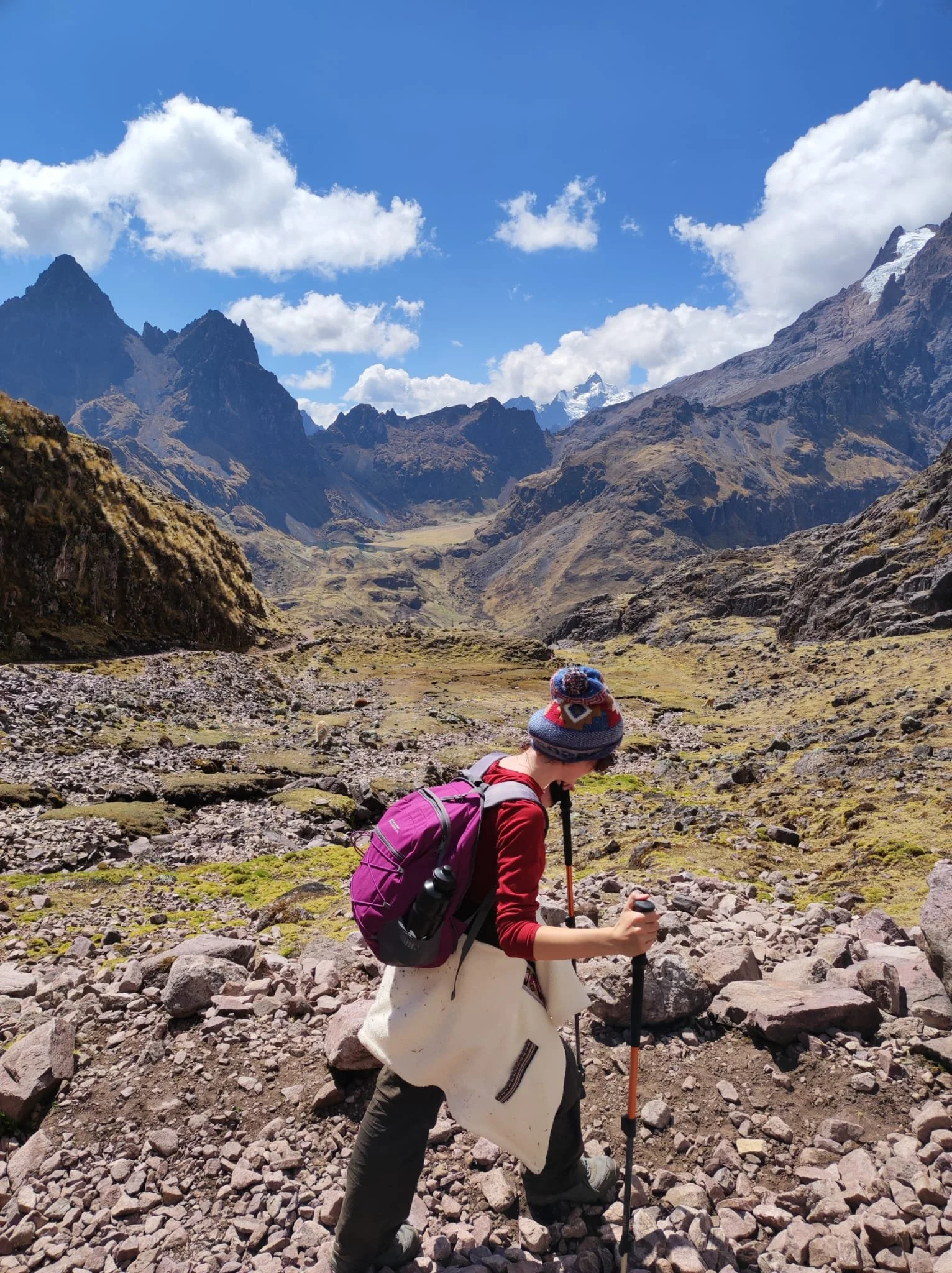
Day 1 of the hike
Possible negatives
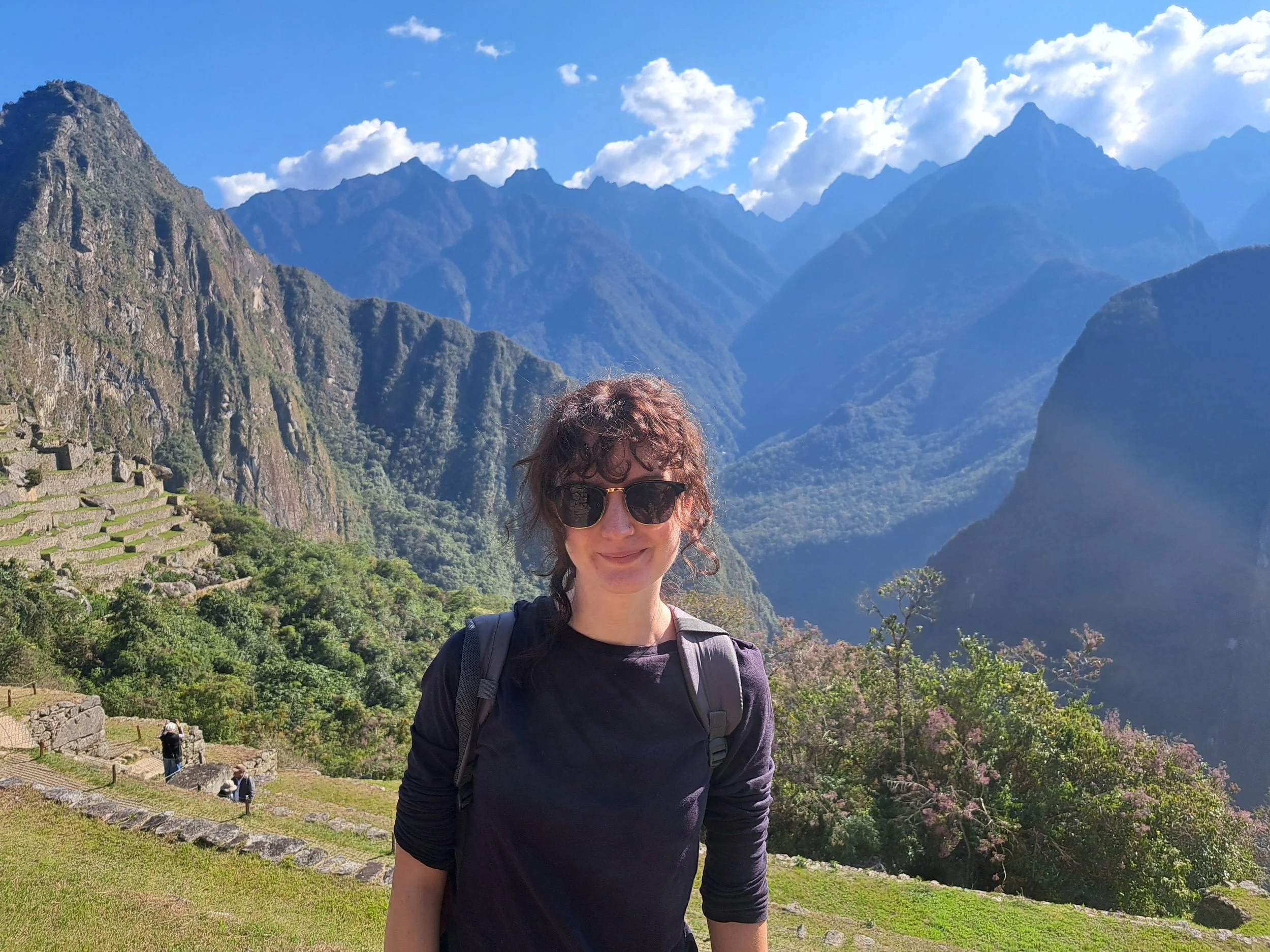
The only downside to our trip was that, due to the shorter nature of the Lares Trek, the trail finishes the day before you visit Machu Picchu. This means, upon finishing the hike, you get the train to Aguas Calientes and spend the night there, before travelling to Machu Picchu by bus in the morning. This may differ depending on the company you travel with, but G Adventures was organised accordingly. On the plus side, we were well rested and clean when we visited the site (my pictures thank me for that), but we did miss out on the view of Machu Picchu through the sun gate available on the Inca Trail. The view itself has varying reviews, with some saying it was their trip's highlight, while others state it was overcrowded and, subsequently, difficult to see. Regardless, this is something to consider before choosing a trek.
Likewise, the Lares Trek is considerably more nature and landscape based (and uses horses instead of Porters to help carry your belongings), whereas the Inca Trail has more archaeological sights and Inca ruins. I suggest doing your own research on both hikes and deciding for yourself which experience you would prefer.
Give yourself enough time to acclimatise in Cusco…
Before hiking to Machu Picchu, Rainbow Mountain, etc.
I thought I was about to have a heart attack minutes after landing in Cusco. This is not completely out of the blue, being that I’m cripplingly afraid of flying and the turbulence over the Andes is no joke, but my heart started beating so quickly as we taxied to the terminal, and I couldn’t seem to catch my breath. I was completely fine, just experiencing altitude sickness and temperate levels of health anxiety, which I eventually realised after panic googling my symptoms at baggage reclaim.
In the grand scheme of things, I wasn’t that affected by the altitude, excluding some tiredness for the first couple of days, a headache, and mild breathlessness. I’ve never felt so unfit as when I was trying to lift my 65L backpack into my dorm's stacked lockers a few hours after landing. That being said, altitude sickness affects everyone differently (our guide claimed to be affected by altitude sickness on day 2 of our trip; I personally think he just had man flu, but that's besides the point), so I recommend playing it safe. A bad bout of altitude sickness can make your hiking experience quite uncomfortable, so if you can, give yourself around 3 days in Cusco before doing anything too strenuous, and consume as much coca tea as possible!
Although I don’t think altitude sickness tablets are a necessary purchase for everyone, from my personal observations, the older you are, the more the altitude affects you and the longer it takes to acclimate. Therefore, for some, they may be a favourable option.
Bring warm clothes and LOTS AND LOTS OF LAYERS
I have never been so cold in my life; this is most definitely hyperbolic and very melodramatic, but at 2 am, camping 3,800 m above sea level, nestled in a valley between the shadows of two mountains, I was fully convinced my bones had permanently iced over. This conundrum was completely my own making. I had done very little research before my trip, stupidly thinking that because I was in South America, it would be hot all year round, THIS IS NOT THE CASE…obviously.
(This recommendation is seasonally and regionally specific, so for clarification, I travelled during August and September, spending most of my time at high altitudes in the Andes in southern Peru before heading down through Bolivia, ending in the Eduardo Avaroa Andean Fauna National Reserve, before crossing into the Atacama Desert (the classic whistle stop tour))In short, it can get very, very cold, particularly at night. I would recommend taking: a handful of light layers (so you can strip down during the day), a set of thermals, jumpers/ hoodies, a woolly hat and gloves, a handful of thick hiking socks, and a coat (one of those light puffers would be great, as they can fold up really small). You can always buy warmer clothes once you’ve arrived, as stalls selling cheap woolly attire are everywhere (my fake Patagonia fleece is hanging over my chair as I write this), but if you remember to bring the basics, you can leisurely browse for souvenirs without your fingers going numb.
On that note, many of the cheaper hostels/hotels we stayed in didn’t have central heating and/or hot water (you get what you pay for, so this is not a complaint!) but keep this in mind if you are planning to budget travel, as you might want to bring thicker PJs or a specific thermals for nighttime if you run cold like I do!
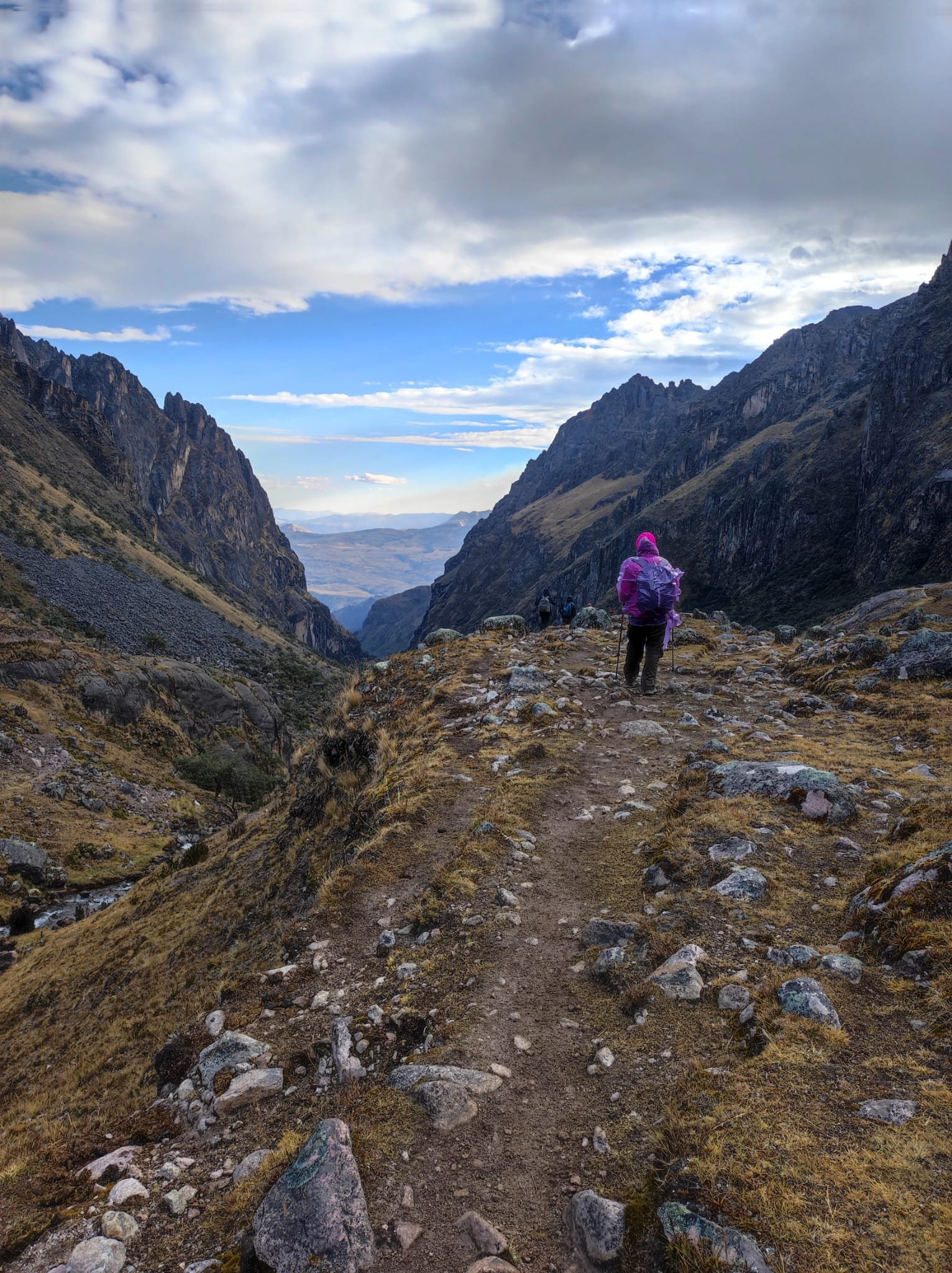
And maybe bring a good rain coat too!
The UV is CRAZY
Again, another Googleable fact, but alas, I was caught out by this one as well! On your journey to Machu Picchu, your lovely guide will tell you to reapply your sunscreen every 2 hours...LISTEN TO THEM.
Don’t be fooled by the mild weather; heatstroke took out my trekking group with embarrassing efficiency. It's an exceedingly unpleasant experience trying to sleep on day 1 of your 3 day hike while you are simultaneously frozen to the core and burning hot to the touch, so please reapply. When you're on the trail, you won’t always have access to running water to properly wash your hands, so if you're an acne prone germaphobe like I am, I would recommend bringing a sunscreen stick if you don’t want to touch your face unnecessarily.
A List of hygiene recommendations for the Inca Trail and/or Lares trek
Hand sanitiser
Baby wipes
Small travel micellar water to wash your face (I was determined to fend off a wilderness induced breakout)
Sleeping bag liner… (a must for germaphobes like me)
The weight limits are very strict on the Inca Trail (for obvious reasons), to ensure the health and safety of the Porters that help carry you’re belongings; keep this in mind when packing and make sure you weigh your bags before hand.
Double-check your passport details
To purchase your tickets to Machu Picchu, you will have to provide your passport number. Make sure this is entered correctly. If your passport number is even a digit wrong, you may be denied entry to the site, so for my fellow dyslexic backpackers, get someone to double check it for you!
Bring enough money to tip guides/ porters
This can be in Peruvian sol or USD (USD is preferred) . Although tripping is not specifically required, it is expected, so make sure you bring extra cash along with you as well! There are no ATMs on the trail…
Happy travelling! x